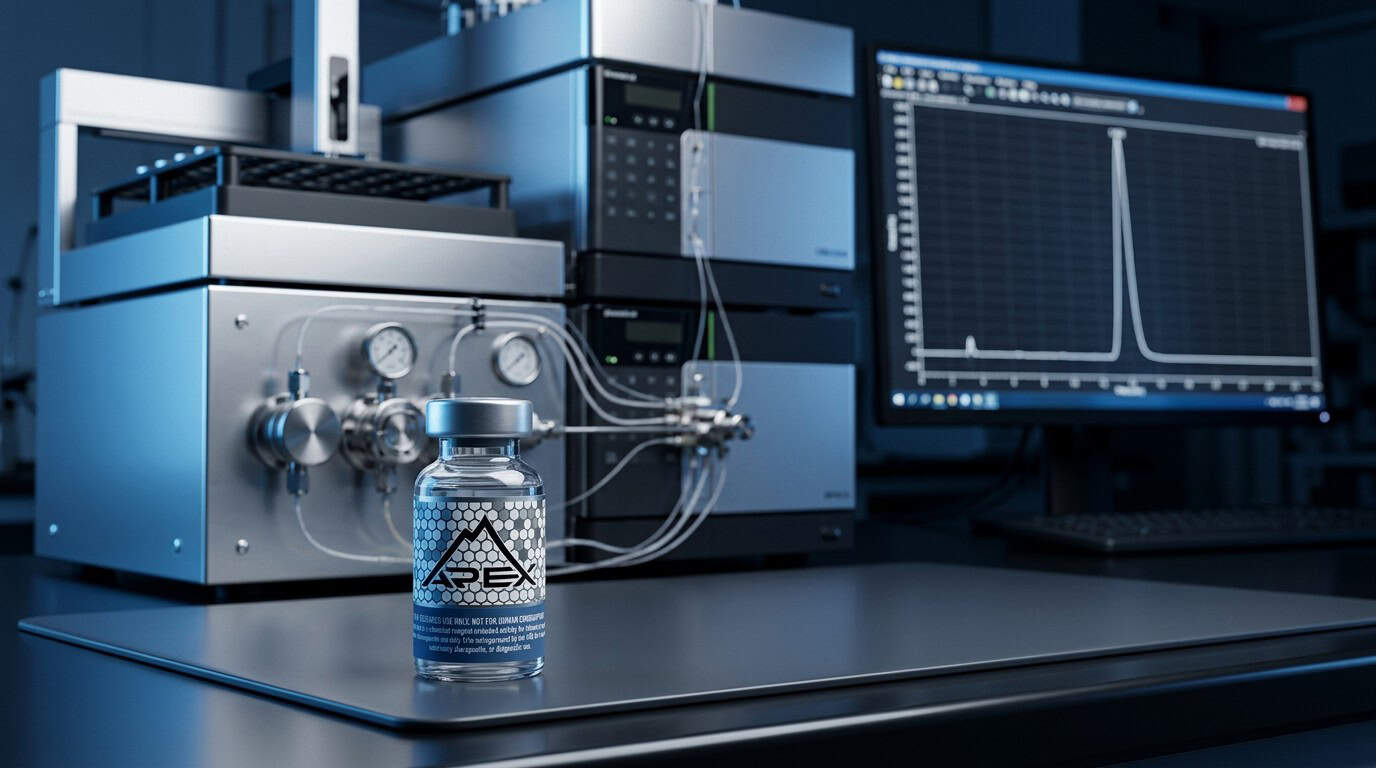
Chemical & Physical Peptide Analysis
Peptide Pureness & Quantitation Testing
While peptide purity isn't the only element, utilizing badly characterized reagents is an identified factor to irreproducible results. For a 10-residue peptide with 99.5% coupling efficiency, you 'd expect regarding 95% of the final product to be the full-length series more info check here prior to purification. For a 30-residue peptide at the same performance, that goes down to roughly 86%. This is why longer peptides are harder to create at high pureness and commonly set you back more. Pureness is the percent of books in the shipment that have every page printed properly, in the right order, with no missing phases and no added pages stuffed in. A 95% purity implies that out of every 100 "publications" in your set, 95 are perfect duplicates and 5 have some kind of mistake.- The mobile stage is a slope of water and a natural solvent like acetonitrile, typically with a small amount of trifluoroacetic acid (TFA) to hone the peaks.
- HPLC is excellent at answering the question "just how pure is this example by chromatographic area percent?
- Explore our magazine to check out verified research substances and find out more concerning our screening and quality assurance procedure.
- Similarly, prevent laboratories that can not show verified logical approaches.
- A peptide listed at 75% purity and one at 99% purity aren't simply different grades-- they can create meaningfully various results in the exact same assay.
Our Peptide Purity Decision Services
It is one reason appropriate peptide storage and reconstitution techniques matter. Partial peptide pieces can result from insufficient synthesis or post-synthesis destruction. These fragments are normally smaller sized than the target peptide and may elute at different retention times.Can Hplc Identify Peptide Degradation?
Enhancing HPLC, laboratories use Mass Spectrometry (typically paired as LC-MS) to verify the peptide's molecular weight and series identification. Mass spectrometry gives molecular confirmation by detecting the precise mass of the peptide and any type of co-eluting types or abbreviated series with high accuracy. Together, HPLC and MS data enable analysts to validate that the peptide's make-up matches what it should be (proper amino acid sequence and anticipated alterations) and that no considerable contaminants exist.